Published: July 7, 2026
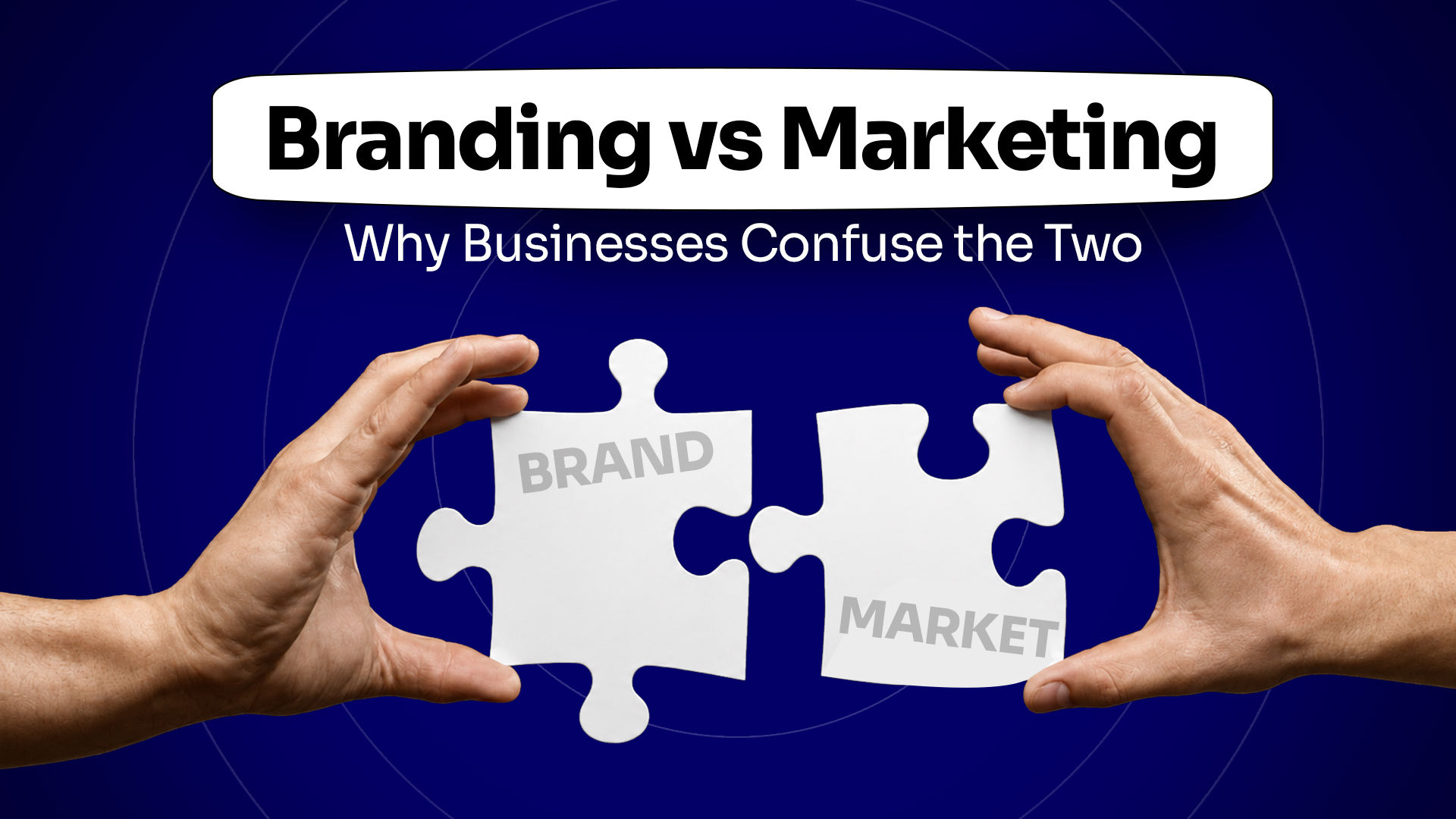
Walk into any small business meeting and you’ll likely hear “branding” and “marketing” used as if they mean the same thing. Someone asks for “better marketing,” but what they’re really describing is a logo redesign. Someone else wants “stronger branding,” but they’re actually talking about running more ads. This mix-up isn’t just a semantic issue — it leads companies to spend money in the wrong places, chase the wrong metrics, and wonder why growth still feels slow even after a big campaign.
Understanding the real difference between branding and marketing can change how you plan, budget, and grow your business. Let’s break it down.
What Is Branding?
Branding is the identity of your business. It’s who you are, what you stand for, and how people feel when they interact with you. Branding includes:
- Your business name, logo, and visual identity
- Your brand voice and tone
- Your core values and mission
- The emotional experience customers associate with you
- The consistency of your promise across every touchpoint
- What makes you different from competitors?
Every interaction a customer has with your business contributes to your brand. Branding answers the question: “Why should anyone care about my business?”
Elements of Branding
- Brand strategy
- Logo and visual identity
- Brand voice and messaging
- Company values
- Customer experience
- Brand positioning
- Brand reputation
It’s long-term, foundational, and slow to change. Think of brands like Apple, Nike, or Tata; you recognize them instantly, and you feel something specific when you think of them. That feeling didn’t come from a single ad. It came from years of consistent identity-building.
What Is Marketing?
Marketing is the action of getting your brand in front of people and convincing them to buy. Marketing includes:
Marketing includes:
- Search Engine Optimization (SEO)
- Google Ads
- Social media marketing
- Email marketing
- Content marketing
- Video marketing
- Influencer campaigns
- Offline advertising
Marketing brings people to your business, while branding gives them a reason to stay. Marketing answers the question: “How do I get people to notice and buy from me right now?”
It’s tactical, measurable, and often short-term. You can launch a marketing campaign this week and see results within days clicks, leads, or sales.
The Core Difference, Simplified
| Branding | Marketing |
|---|---|
| Who you are | What you say and do to sell |
| Long-term identity | Short-term tactics |
| Builds trust and recognition | Drives traffic and conversions |
| Emotional connection | Measurable action |
| Foundation | Execution |
A simple way to remember it: branding is the promise, marketing is how you deliver that promise to the world.
Why Businesses Confuse the Two – Branding vs Marketing ?
1. Both Involve Visual and Written Content
A brand’s logo appears on a marketing flyer. A brand’s tone appears in a marketing email. Because the outputs overlap visually, people assume the processes are the same. In reality, branding creates the rules; marketing follows them.
2. Marketing Is More Visible, So It Gets the Credit
When a business runs a great ad and sales spike, everyone says “the marketing worked.” But if that ad didn’t already carry a recognizable brand identity, it likely wouldn’t have performed as well. Branding is invisible in the moment but essential to marketing’s success.
3. Small Businesses Often Skip Branding Entirely
Many startups jump straight to marketing, running ads, posting on Instagram, boosting posts without ever defining their brand identity. This leads to inconsistent messaging, forgettable visuals, and campaigns that don’t build long-term recognition, even if they generate short-term sales.
4. Agencies and Freelancers Blur the Line
Some agencies offer “branding” packages that are really just logo design, and some marketing consultants claim to do “branding” when they’re actually just running paid ads. This muddies the terminology further for business owners trying to understand what they actually need.
Why the Difference Matters for Your Business ?
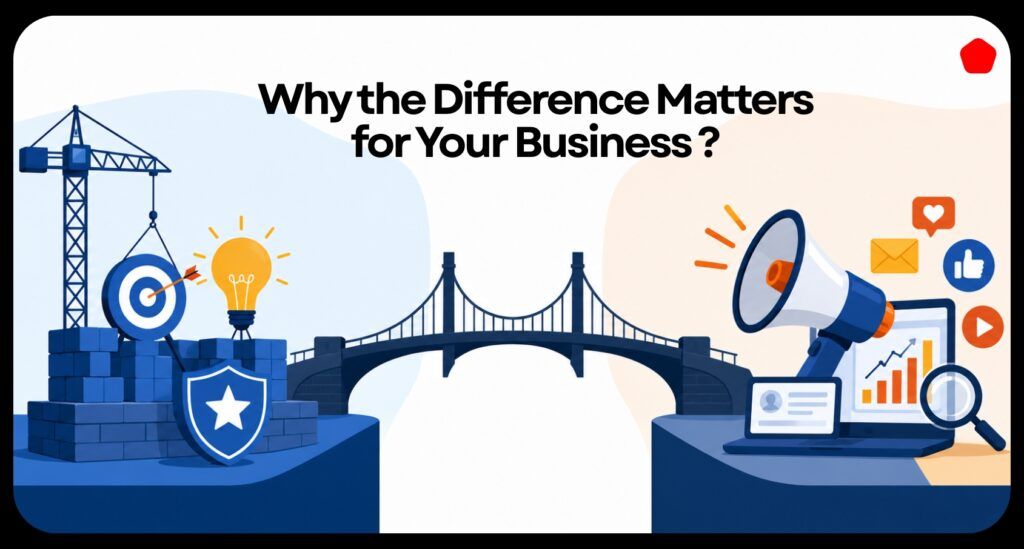
If you invest heavily in marketing without a clear brand, you’re essentially shouting louder without saying anything memorable. People might click, but they won’t remember you, trust you, or come back.
If you invest only in branding without marketing, you might have a beautiful, well-thought-out identity that nobody ever sees.
Branding and marketing should never compete; they should complement each other. The two need to work together:
- Branding builds the foundation — clarity, trust, and recognition.
- Marketing builds the momentum — visibility, leads, and sales.
A strong business strategy usually starts with branding, then layers marketing on top of it. Skipping the first step is one of the most common (and costly) mistakes businesses make.
Imagine running a successful advertising campaign. Customers click your ad and visit your website. If your website has inconsistent messaging, outdated visuals, or lacks credibility, visitors may leave without making a purchase.
A strong brand improves marketing performance by:
- Increasing customer trust
- Improving conversion rates
- Building customer loyalty
- Creating memorable experiences
- Encouraging referrals and repeat business
Marketing gets attention. Branding keeps it.
Can Marketing Succeed Without Branding?
Marketing can certainly generate traffic, leads, and even sales without strong branding—but those results are often short-lived. Without a clear brand identity, customers may remember the promotion but forget the company behind it. This makes it difficult to build trust, encourage repeat purchases, or stand out in a crowded market.
For example, two businesses may run identical advertising campaigns. The business with a recognizable brand, consistent messaging, and a professional identity is more likely to convert visitors into loyal customers.
Without effective branding, businesses often face:
- Low customer trust
- Higher advertising costs over time
- Poor brand recognition
- Reduced customer loyalty
- Difficulty differentiating from competitors
Marketing may attract attention, but branding is what transforms first-time buyers into long-term customers.
Can Branding Exist Without Marketing?
A strong brand alone does not guarantee business growth. Even if your company has an outstanding reputation, exceptional products, and a memorable identity, potential customers still need to discover you.
Marketing acts as the bridge between your brand and your audience. It communicates your value proposition through channels such as SEO, social media, email campaigns, paid advertising, and content marketing.
Without marketing:
- Your target audience may never find your business.
- Competitors with better visibility may capture your potential customers.
- Growth opportunities become limited.
- Brand awareness expands much more slowly.
The most successful businesses combine a compelling brand with strategic marketing efforts. Branding establishes trust, while marketing ensures that trust reaches the right audience.
Measuring Branding vs Marketing Success
Although branding and marketing work together, they are measured using different performance indicators.
Branding Metrics
Branding success is typically evaluated over the long term through factors such as:
- Brand awareness
- Brand recall
- Customer loyalty
- Repeat purchase rate
- Online reviews and reputation
- Customer satisfaction
- Net Promoter Score (NPS)
These metrics indicate how customers perceive your business and whether they are likely to recommend it to others.
Marketing Metrics
Marketing performance is measured using campaign-specific data, including:
- Website traffic
- Lead generation
- Conversion rate
- Cost per Lead (CPL)
- Click-Through Rate (CTR)
- Return on Ad Spend (ROAS)
- Email open and click rates
- Social media engagement
Monitoring both branding and marketing metrics provides a complete picture of business growth. While marketing measures immediate performance, branding reflects long-term business value and customer relationships.
Signs Your Business Needs Better Branding
Your business may need to strengthen its branding if:
- Customers don’t remember your company.
- Your messaging changes across platforms.
- Your competitors look more professional.
- You struggle to build customer loyalty.
- Price becomes your only competitive advantage.
Strong branding helps businesses compete on value instead of price.
A Quick Way to Diagnose Your Business
Ask yourself:
- Can someone describe what my business stands for in one sentence? (Branding)
- Do I have a consistent look, voice, and message across platforms? (Branding)
- Am I actively generating leads or sales through campaigns? (Marketing)
- Are people coming back because they trust and recognize me, or just because of a discount? (Branding vs. Marketing)
If you’re weak in the first two, your marketing efforts are likely underperforming, no matter how much you spend.
Why Chennai Businesses Should Focus on Branding ?
Chennai has become one of India’s fastest-growing business hubs, with thriving startups, IT companies, manufacturing firms, healthcare providers, educational institutions, and eCommerce brands. As competition continues to grow, simply promoting products isn’t enough; businesses need a distinct identity that resonates with their target audience. Branding is a solid choice for businesses, local or otherwise, looking to invest in their identity and growth strategy. A few reasons why:
- Growing business ecosystem: Chennai is home to a diverse mix of industries automotive, IT, healthcare, manufacturing, and D2C startups which has created a demand for agencies that understand both traditional and modern branding needs.
- Cost-effective without compromising quality: Compared to metros like Mumbai or Bangalore, Chennai often offers more competitive pricing for design and strategy work, while still maintaining high creative standards.
- Bilingual and culturally attuned talent: Agencies here are skilled at building brands that resonate with both local Tamil audiences and pan-India or global markets, which is valuable for businesses seeking broad appeal without losing local relevance.
- Rising creative talent pool: With design schools, growing startup culture, and increasing exposure to global branding trends, the city has no shortage of skilled designers, strategists, and marketers.
Working with a branding company in Chennai can help businesses create a cohesive brand strategy, refine their messaging, and build a professional visual identity that stands out in both local and global markets. From logo design and brand positioning to digital presence and customer experience, effective branding strengthens credibility and supports long-term business growth.
Whether you’re launching a new venture or refreshing an existing brand, look for a best branding agency in Chennai that offers a full-funnel approach: brand strategy, identity design, and marketing execution under one roof, rather than agencies that only handle logos or only run ads. That combination tends to produce more consistent, effective results than piecing together separate vendors for each function.
Common Branding Mistakes Businesses Make
Avoid these common pitfalls:
- Focusing only on logo design
- Inconsistent messaging across platforms
- Ignoring customer experience
- Copying competitors
- Frequently changing brand identity
- Running marketing campaigns without a defined brand strategy
Consistency is one of the biggest drivers of successful branding.
Final Thoughts
Branding and marketing aren’t competitors; they’re partners. One defines your identity; the other spreads it. Businesses that confuse the two often end up with campaigns that generate short bursts of attention but fail to build lasting recognition or loyalty.
If you’re planning your next growth phase, take a step back and ask which one your business actually needs right now: a clearer identity, a stronger push to market, or most likely both, working in sync.
Frequently Asked Questions
Branding and marketing serve different purposes, making both equally important. Branding builds trust and shapes customer perception, while marketing promotes your products or services and drives sales. Businesses achieve the best results when both work together.
Branding should come first. Defining your identity, values, target audience, and messaging before launching marketing campaigns ensures consistency and improves campaign effectiveness.
Absolutely. Strong branding helps small businesses establish credibility, differentiate themselves from competitors, and build customer loyalty—even with limited marketing budgets.
Unlike marketing campaigns that can produce immediate results, branding is a long-term investment. Businesses typically see stronger brand recognition, customer trust, and loyalty over several months or years through consistent branding efforts.
Consistency across your website, social media, advertisements, packaging, and customer interactions builds familiarity and trust. Customers are more likely to remember and choose brands that present a unified identity across all touchpoints.
Yes. Branding provides the foundation, while marketing drives visibility and customer acquisition. A well-defined brand makes marketing campaigns more effective and helps businesses achieve sustainable growth.